Our History


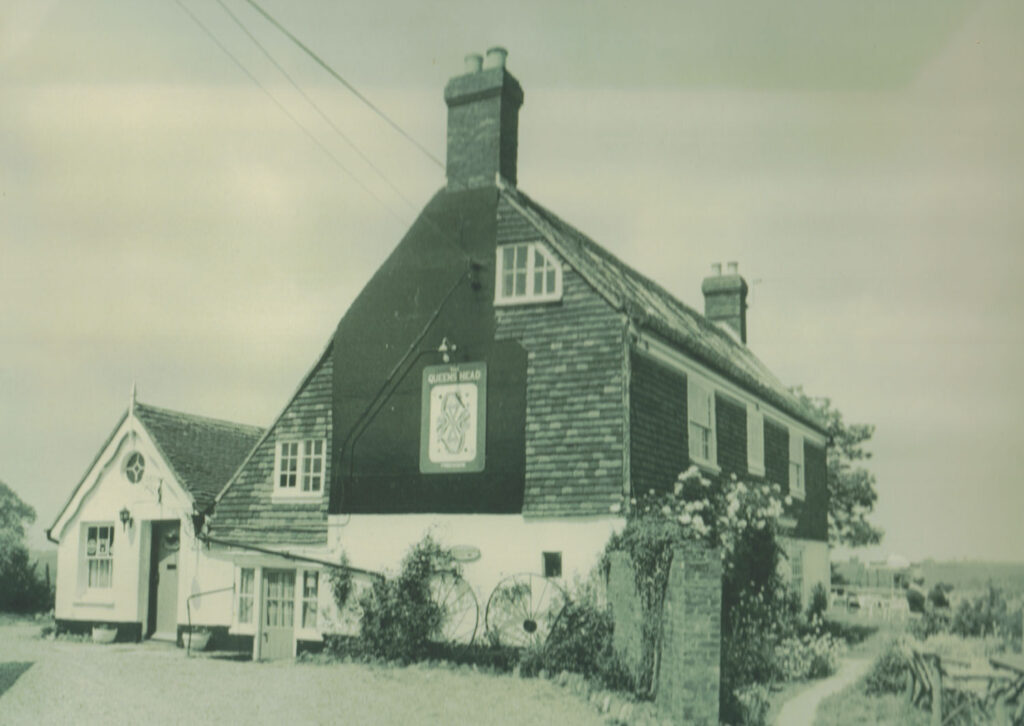
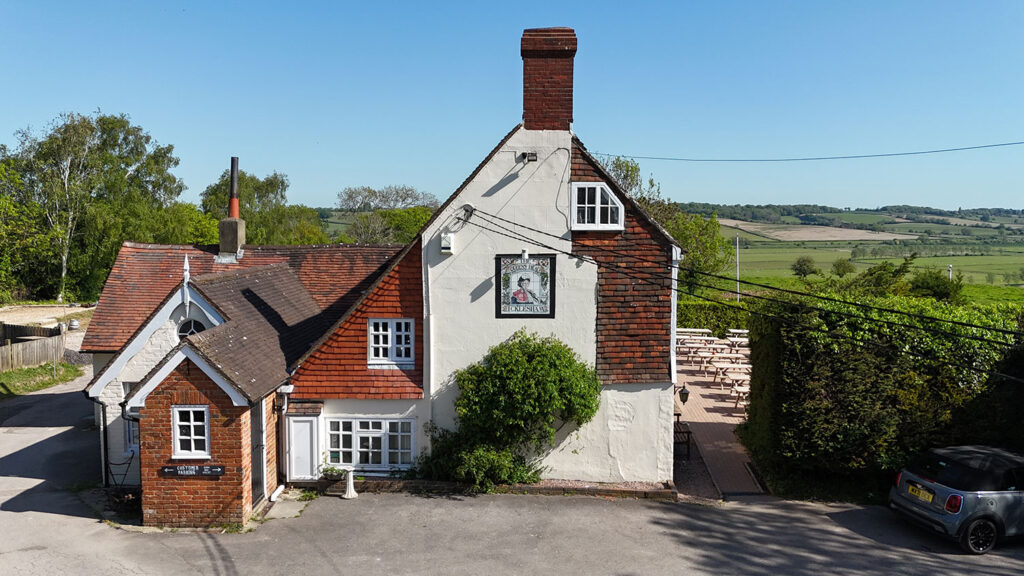
The Queens Head Inn, Icklesham - Established 1632
The Queens Head Inn was constructed in 1632 during the seventh year of Charles I’s reign. Originally, the premises consisted of two dwelling houses, referred to in historical records as farm tenements, complete with outbuildings and adjacent land. These homes were occupied by farm workers bound to Gervais Redding, a Yeoman of Udimore, who owned the properties along with others in the surrounding parishes.
1648
In 1648, Redding bequeathed these two dwellings, along with two others in Udimore, to his eldest son, Nysall. At this time, one was home to Elias Wintle, a farm laborer, while the other was occupied by Thomas Drayton, a keeper of cattle. These families resided for over a generation, with the eldest son typically inheriting the house and continuing to work for the estate. However, upon the death of the head of the family and in the absence of a male successor, eviction often occurred. This was the case for the Wintles; following Elias Wintle’s death in 1679, his widow Naomi and their three daughters were displaced.
After the Wintles, Jacob Wray took over their dwelling, while William Drayton succeeded his father in the other. By 1718, both families had moved, and the homes became occupied by Stanton Rymer and Henry Fairall, keepers of swine. At that time, the estate was managed by Amelia Redding, the primary heir, alongside several co-heirs, which eventually led to divisions and sales of the estate.
By 1670, the dwellings and land became the property of Thomas Martyn, a Yeoman of Icklesham, who acquired them in 1759. Upon his death in 1786, he bequeathed the estate to his son Robert, who then passed it to his son Richard in 1817. The Martyn family continued to occupy both dwellings until Richard Martyn’s widow, Elizabeth, leased one to William Goodwin, also a keeper of swine, in 1829.

1831
In 1831, Goodwin transitioned from keeper of swine to beer retailer by obtaining a beer house license, allowing him to sell ale from the premises. He opened the beer house that April, registered simply as a beer house under his name. By 1845, he had added pork butcher to his roles, and in 1847, he vacated the house for another establishment called The Plough at Cock Marling. Frederick James Sawkins then took over as a beer retailer and butcher.
Following Elizabeth Martyn’s death in 1851, Isaac Hoadley, an attorney from Hastings, was entrusted with the estate. He sold the adjacent dwelling to Peter Sharpe, a saddler, in 1852 and the beer house to the Star Brewery of Eastbourne in 1853. The brewery registered the establishment as the “Queens Head” Beer-house and placed James Filmer Russell in charge.
1900's
Gutsell died in 1919, and Sidney Bertram Sidney took over, followed by Alfred Harry Herbert in 1924. Herbert saw the completion of work to merge the properties into one. From there, Francis Balcombe took over in 1938, followed by Horace John Willmot in 1946. The “Queens Head” was granted a full license in 1949 during Willmot’s tenure. After various ownership changes, Anthony Crundwell acquired the pub in 1953, which later changed hands to Courage Barclay and Simonds in 1965. In 1973, Crundwell secured the freehold, and by 1977, the property was sold to Eric Davies, followed by Bryan Yole and Alan Hughes in 1981, and finally to the current owner, John Martin Harris & Ian Mitchell in 1983.